Behavioral Economist · Leadership Coach
Think clearly.
Decide well under pressure.
John David Balla helps senior leaders and founders see their own decision blind spots — and decide with the clarity the stakes demand. Nine years in the making, the Critical Thinking Literacy framework is his method.
Who this is for
Founders, executives, and senior leaders facing high-stakes decisions.
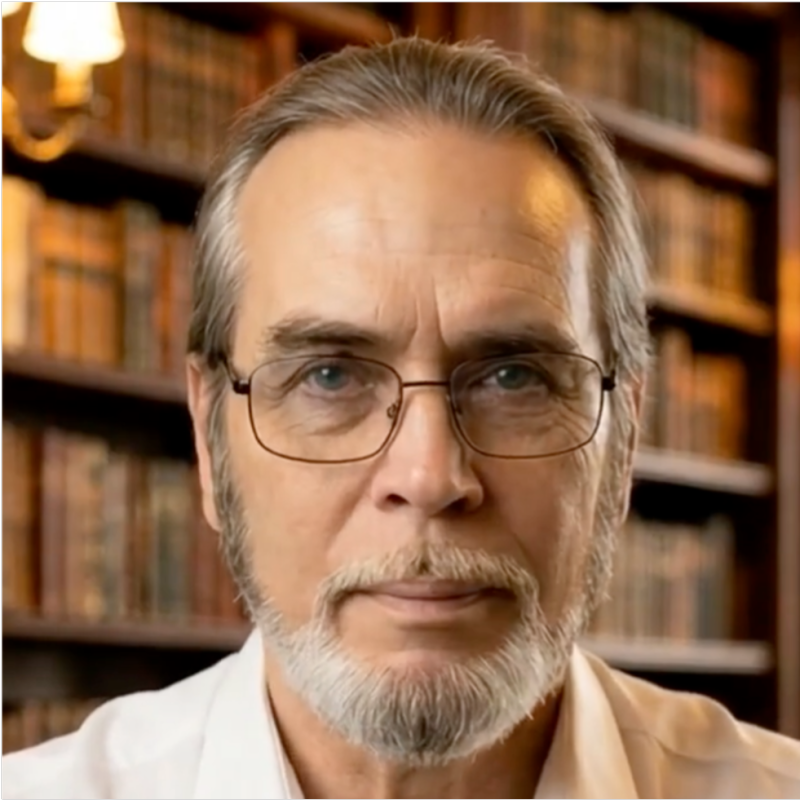
John David Balla, Ph.D.
Founder, the Critical Thinking Literacy method.
Who he is
A behavioral economist who studies how leaders decide.
For the better part of a decade, John has sat across from the people who carry the hardest calls — founders weighing a pivot, executives reorging a division, boards weighing who to trust. His work begins where the spreadsheet ends: in the beliefs, biases, and quiet habits of mind that shape a decision before anyone notices.
He is a behavioral economist by training, a leadership coach by practice, and a consultant when the stakes call for a steady second pair of eyes. The throughline is always the same: help a leader see their thinking clearly, then decide.

— Where the hardest calls begin: a desk, a notebook, a clear question.
The framework
Critical Thinking Literacy, in six moves.
Built and refined over nine years of coaching and research.
Each move is a discipline a leader can practice — and a decision can survive. Tap a stage to read the move in full.
What a session covers
One session. Four moves. A decision you can defend.
A first session isn't a sales call. It's a working session on a real decision — structured, candid, and built around the CTL framework.
- 01
Diagnosing decision blind spots
We map the decision you're carrying and surface the biases, defaults, and inherited assumptions hiding inside it.
- 02
Belief versus behavior
We separate what you believe about the decision from what your choices actually reveal — and close the gap.
- 03
The framework on a live challenge
We run a real decision on your desk through the six CTL moves, in real time, until the reasoning is legible.
- 04
A next-step plan
You leave with a clear path: what to decide, what to defer, and what to watch as the signal that you were right.
Outcomes for a leader
What changes after a session.
Not features. Results — the kind you can point to the next time a hard call lands on your desk.
You relitigate decisions you already made well.
You set a threshold for revisiting — and stop second-guessing.
Bias only shows up in the cost, after the fact.
You catch sunk costs, confirmation drift, and false urgency in real time.
Your reasoning lives in your head, hard to share.
You can defend it out loud — to your board, your team, and your own doubt.
Speed and clarity trade against each other.
You decide faster without deciding worse.
Disagreement feels personal, so you avoid it.
Your team argues the reasoning, productively, because you share a language for it.
You see the decision on the agenda.
You see the one underneath it — with the real trade-offs named.
Change the belief, and the behavior follows.
The idea behind John’s writing
Proof
What leaders say after a session.
John didn't hand me a framework — he handed me back my own thinking, clearer than I'd seen it in months. The decision I'd been circling for weeks got made in the session.
I came in with a decision and left with the reasoning behind it. My team stopped arguing the person and started arguing the logic. That alone was worth the hour.
Years refining the CTL method — in practice with leaders, not only in theory.
A way in
Not ready to book? Start here.
Two low-commitment first steps before a session — watch how John thinks, or take the assessment and see where your own decisions bend.
Watch how John thinks
3 videosWhy Your Brain Jumps to Conclusions Before the Evidence Is In
3 Questions That Expose the Beliefs Secretly Running Your Life
Why "You Can’t Prove I’m Wrong" IS NOT an Argument
The assessment
Where do your decisions bend?
Twelve questions. Ten minutes. A clear picture of where your decision-making holds up — and where it quietly cracks under pressure.
No commitment. Results are yours to keep.
Book your first session
Bring a real decision.
Leave with clarity.
A first session is a working session on a decision you're carrying right now. Share what's on your mind and a time that suits you. John will reply personally.
Good to know
A working session on a real decision you're carrying. John maps the decision, surfaces the blind spots, and runs it through the CTL moves with you — not at you.
Sixty minutes, one-on-one and private.
Yes. Sessions are held over video, scheduled for a time that works across time zones.
You leave with a clear next step and a short note from John summarizing the reasoning. If continued work makes sense, he'll lay out what that looks like — no pressure.